This Friday is November 1st, and that means NaNoWriMo! Thirty days of writing like crazy with the goal of achieving 50,000 words of the first draft of a novel.
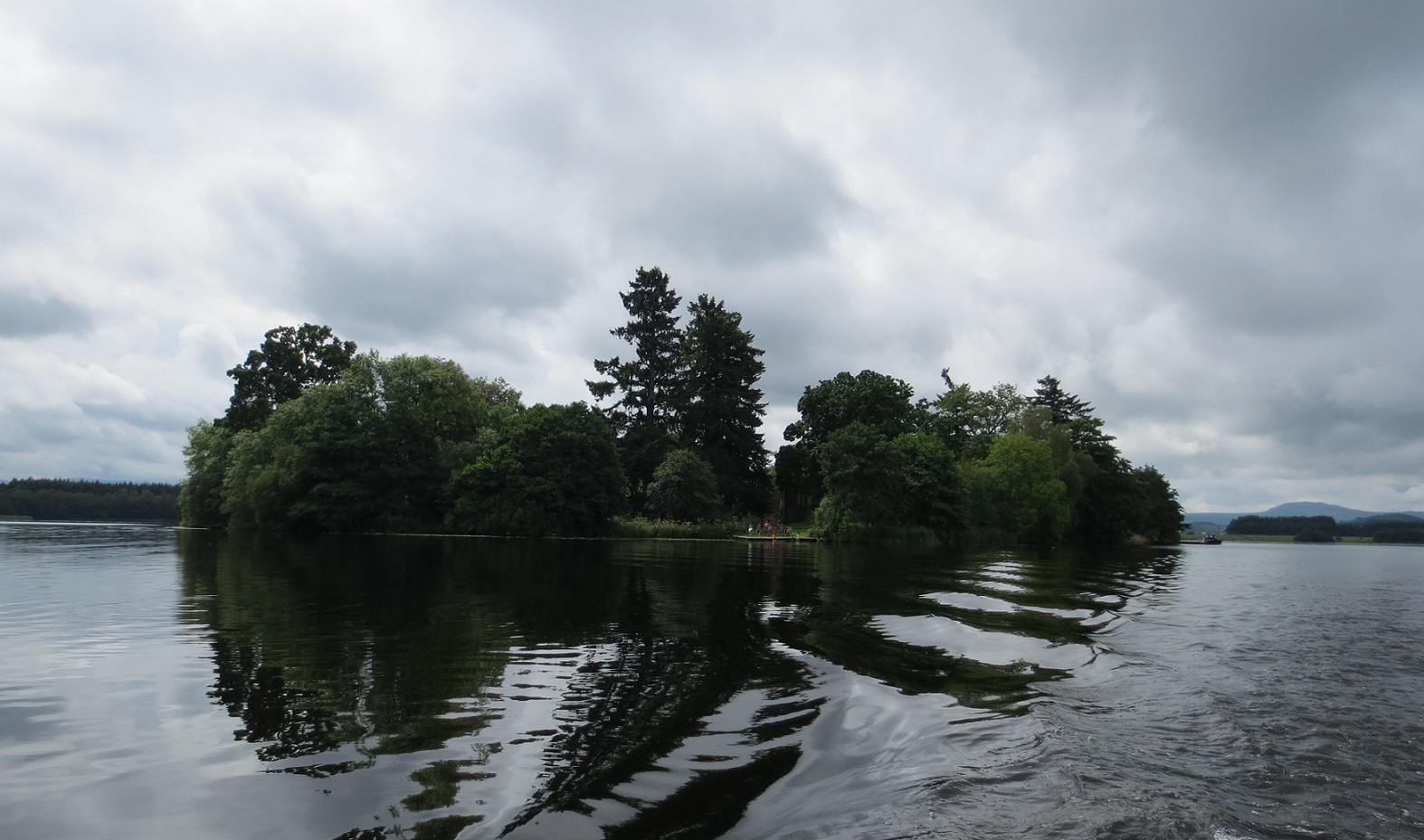
Island in the Lake of Menteith
This year I will be writing the beginning of a novel that’s been rolling around in my head for some time. It’s a hero’s journey set in a post-science fiction world. To me that means the humans in my world are the ancestors of Earth colonists who landed there centuries ago. Technology has devolved, and the aliens that helped them settle have died out completely but their influence remains. The working title is “Dyoza” after the name of the world.
One of the places on Dyoza is the priory located on an island in the middle of Tcharraz lake. The villain and another character grew up there.
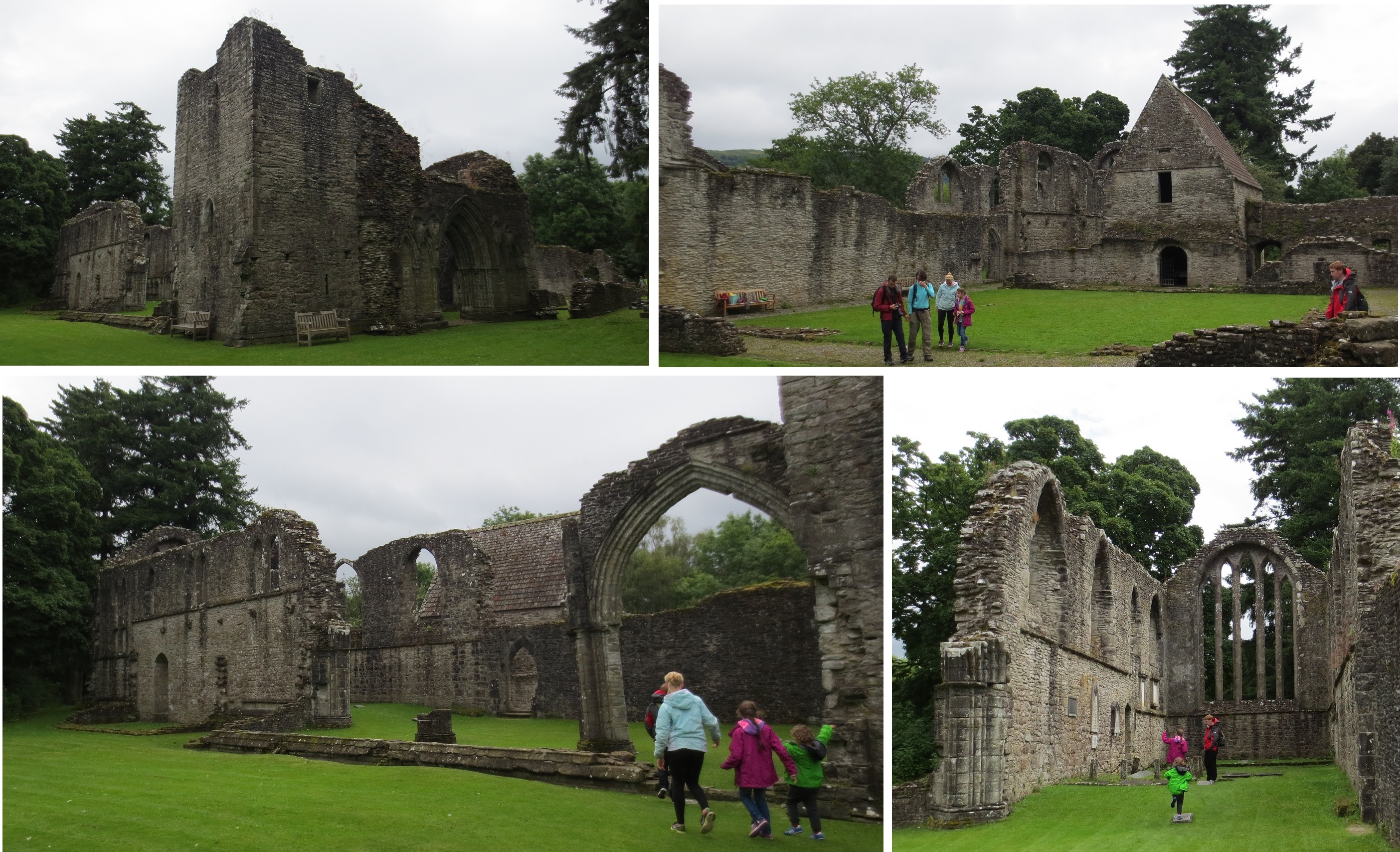
Ruins of Inchmahome Priory
I’ve taken my inspiration for this fictional location from (the real) Inchmahome Priory, located on an island on the Lake of Menteith, in Scotland near Stirling. I visited there this summer with my family. Inchmahome Priory was established in 1238, but Protestant Reformation ended it in the mid-1500s. It’s a small island, absolutely beautiful, with paths around the edge, and across. I could imagine people walking around the island in quiet contemplation.
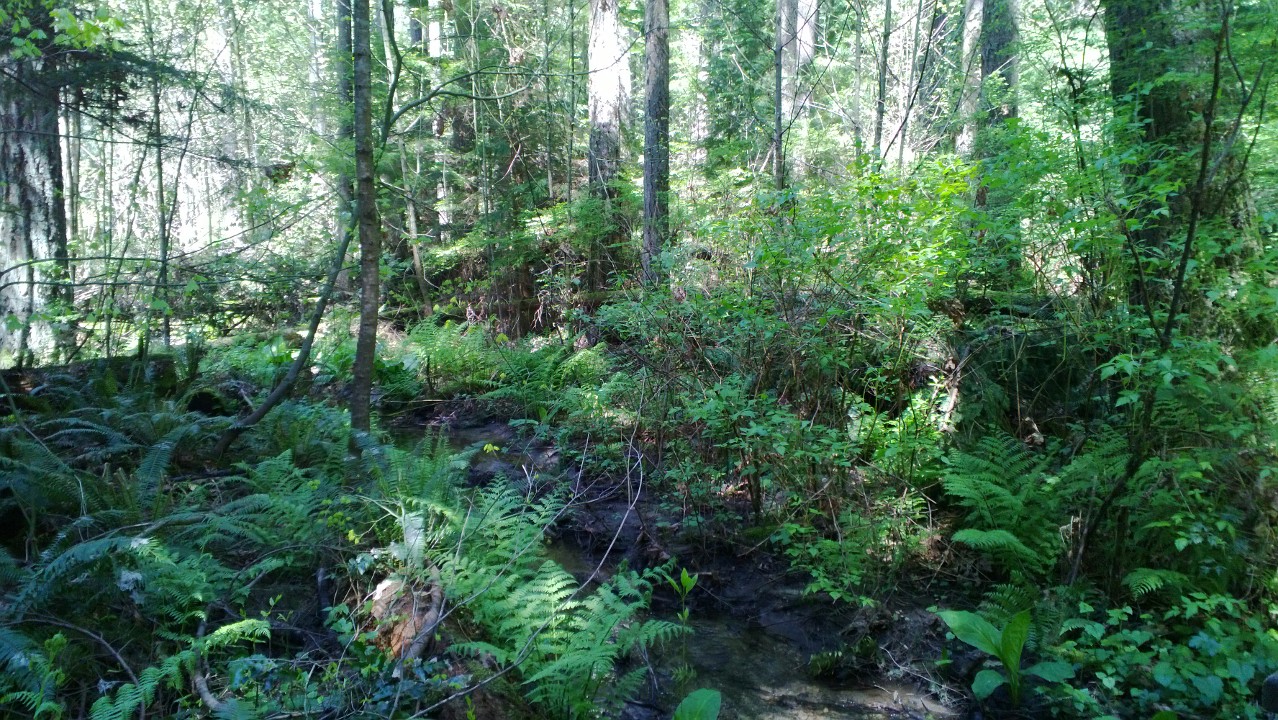
Farrel McWhirter Park, Urban Greenman InspirationI love the mythology surrounding the Urban Green Man. As I’ve posted before, I’m a huge fan of Charles De Lint. So when I saw the publisher’s call for submissions for a whole book of Urban Green Man stories, with an introduction written by Charles De Lint himself, I knew I was going to submit something.
Farrel McWhirter Park, Urban Greenman InspirationThe idea for my story, “Green Salvage” came to me as I was waiting for my children at Farrel McWhirter park in Redmond, where I live. This park is spectacularly gorgeous, and it is five minutes from the Redmond Town Center mall.
Farrel McWhirter Park, Urban Greenman InspirationI like to think of the Urban Green Man as a spirit of nature, present in the actions of ordinary people doing their part to preserve the green places; always there in your peripheral vision. All you have to do is look.
I thought I would share a few things about what my first reader experience was like. The mileage of other first readers and potential first readers will vary.
I read slowly, so slushing took up a significant amount of time for me. I didn’t keep track for the first four months, but for the last six months (February through July 2013) I first-read 357 stories for a total of 1,391,500 words. That’s like between eight and thirteen novels. And I was barely “keeping up”.
On a few rare occasions, I skimmed after the first 1000 words or so. But most of the time I read the entire story. Many first readers don’t do that – because it’s not a requirement – but I did. I’m not completely sure why I kept reading to the end. I guess I didn’t get jaded, but by the conclusion of my stint I was feeling burned out.
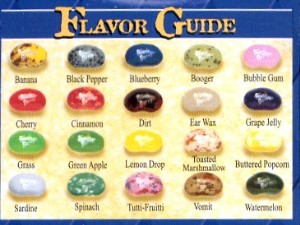
Reading from the slush pile was like eating Bertie Bots Every Flavor Beans. Sometimes the one I pulled out of the queue was like tiramisu. Occasionally I bit into earwax flavor. But generally I read a lot of interesting stories.
An often-repeated piece of writing advice is to read what you’re aspiring to create – read the best authors in the genre you’re writing in. I personally found that the time I spent reading slush severely limited the time I could spend reading anything else. On the plus side, I was exposed to genre stories I wouldn’t have read otherwise. I discovered that I really dislike “squick” and body-horror. I discovered that I quite like character-driven horror. (btw, Strange Horizons is NOT a horror market)
One of the bitter-sweet parts of my First Reader Experience was that when I read a really good story, I couldn’t share it. Because of course all submissions are confidential. But on the up side, if I wanted to I could read submissions even if they weren’t assigned to me. So occasionally I got to read brand-new stories written by authors I knew or knew of from their previous publications.
So, would I ever volunteer as a first reader again? The short answer is yes. I learned a great deal, and it was generally a positive experience. But first, I need to refuel. I have a huge stack of novels at home waiting to be read. I have a bunch of short stories and a novel churning in my head, begging to be written. And I want to apply some of what I’ve learned to my own writing.
I would definitely encourage my writerly (and readerly!) friends to apply for a First Reader position. My main caution would be make sure you have the time.
Have you ever thought about applying to be a first reader? Have you ever been a first reader? What was it like for you?
I resigned from my position as a First Reader at Strange Horizons. I held the position from mid-September 2012 to the end of July 2013, so that’s about eight-and-a-half months (SH was closed to submissions in December and January.)
the other kind of slush
I’m a bit sad it’s over. Slushing was a good experience, and I learned a great deal.
Writing instructors will often say slushing will benefit your writing. They’ll say it’s good for you. But I have to admit that when I applied I was a little vague about exactly what that benefit would be.
Here are a few things I learned from my first reader experience.
First, I learned that all of the standard advice about writing good fiction that gets repeated in every writing class and how-to-write book is actually true. I knew it on an intellectual level. Now I believe it, on a gut level.
Second, a form rejection letter/email means exactly what it says. The magazine has decided not to publish my story. That’s it. Really. As a First Reader, I sent form rejections most of the time. A thoughtful personal comment for a rejection letter takes time to write. Time that could be spent reading the next story in the FR queue, or writing, or reading that neglected novel.
Third, a personal rejection doesn’t necessarily mean my story is “close” or my submissions are getting better. As a first reader I occasionally added a personal comment to the rejection email because I thought I had something useful or helpful to say about the story. But even then, I only wrote that comment if time allowed.
Fourth, I think I’ve gotten better at giving feedback to members of my critique groups, at least when it comes to identifying story problem areas. Whether or not I’m better at identifying problems in my own writing, or figuring out how to fix them, remains to be seen ;-)
Lastly, I learned the secret to getting your story past the slush reader, and into the hands of an editor. The secret? Write a fantastic story. So simple in theory, but of course difficult in practice. As a first reader, it was the best feeling ever to read a story that I could pass on to the editors with a note that said I loved it. That made my day.
And now that I’m retired from slushing, I’m looking forward to spending more time writing, and making a dent in the piles of books that have accumulated around my house (at a faster rate) since I started slushing.
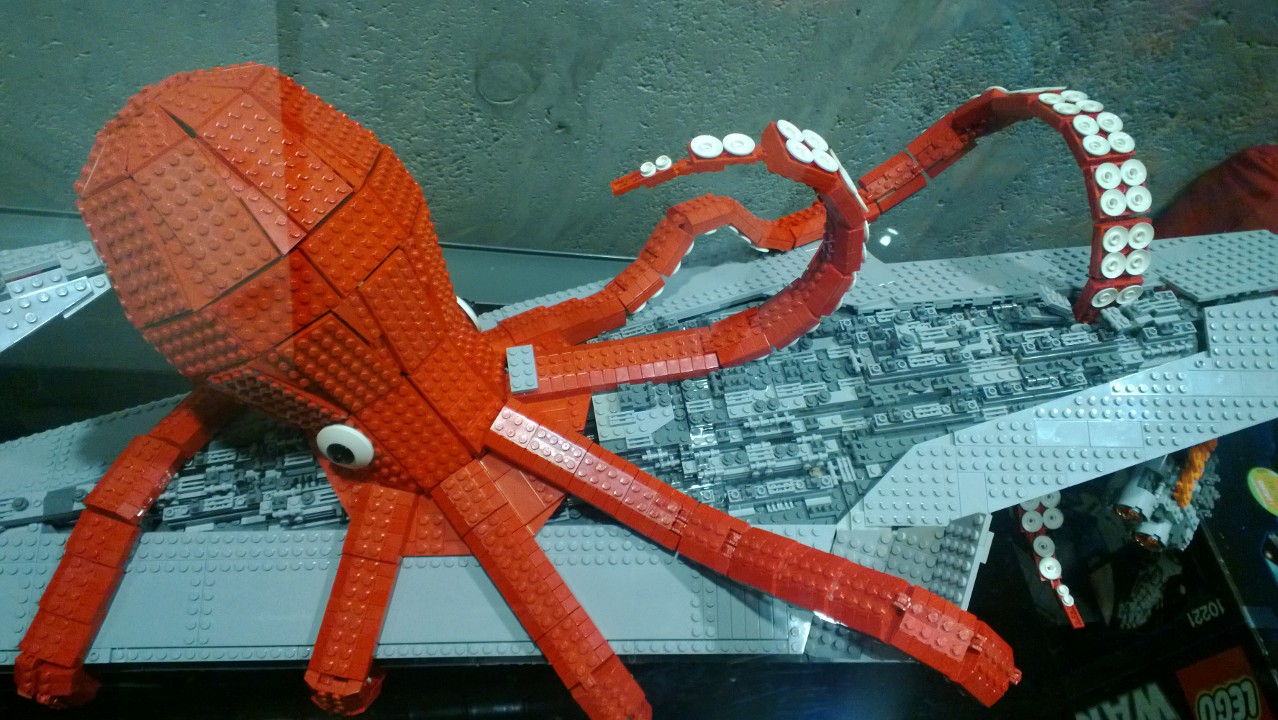
One thing that Mary Rosenblum said during the one-day workshop I took with her was: “Words are like Lego Bricks”
That idea really struck a chord with me, and soon after that I saw this Lovecraftian lego sculpture at the business where my oldest daughter works.
giant octopus attacks spaceship
Words are just building blocks. The magical comes from the way we connect them, and they can be put together in an infinite number of ways. So all I have to do is snap those bricks together and build a story. Edit, and take them apart. Rearrange and build some more.
Argh. It has been almost three months since my last post. Time for some introspection? Excuses? Self flagellation? Pledges to post regularly from now on?
Naw. (Who wants to read that?)
Well, maybe an implied pledge. Because obviously I’m starting to blog again.
I found this dandelion growing in my driveway the other day.
Nature finds a way to keep growing.
It inspired me with its tenacity and simple beauty. I want to be like this dandelion. Push through the cement and grow like a weed.
Looks like Spring has arrived in the Pacific Northwest. Happy Beltane!
I’ve been busy with real life, the kids, etc. Slushing has also kept me busy (since February 1st I’ve first-read 179 stories totaling 702,600 words).
About two weeks ago I attended a Clarion West ONE-day workshop with Mary Rosenblum “Step Into Their Shoes – Breathing Life Into Your Characters”. This workshop was amazing. Mary Rosenblum is not only a wonderful author, she is also a fantastic teacher. If you ever get the opportunity to take a class from her, I urge you to do it!
One thing I learned in the class is that depth can be added to characters during the editing process. An approach Mary suggested is to edit for characterization in layers, progressing to the next level on each pass.
Levels of Characterization
1. External – What the character does in reaction to physical stimuli. (The first draft)
2. Internal – How the character reacts physically. Body language, facial expression, etc. that indicate thoughts, attitudes, emotions, etc.
3. Modify the internal reaction to convey a sense of backstory.
4. Modify the internal reaction with character faults that are known to the character.
5. Fine tune so that as the story progresses, character traits that the character is NOT aware of are revealed to the reader.
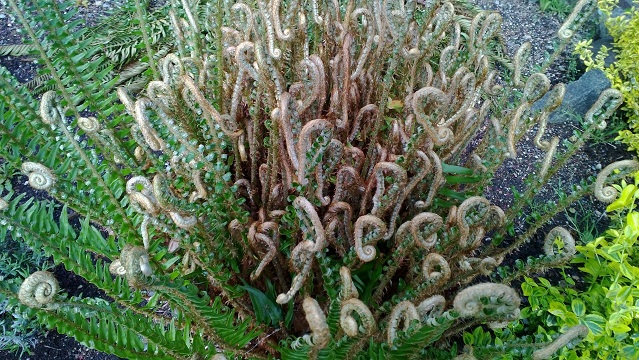
A tentacle fern, ready for Spring!
Here are some more things I’ll be thinking about when I try to create deep characters. (This is sort of from the notes I took in the class, filtered through my brain. Mary’s version and numerous insights were SO much better.)
Voice – What the character says and does.
I’ll be asking myself, would my character really SAY that? Because if I write a character speaking with my vocabulary instead of their own, then that character will sound like me instead of himself. I’ll also be asking myself, would my character really DO that? As the author, I am holding the puppet strings. But the reader should not be aware of those strings. So if I need the character to notice a clue or look out the window to further my plot, I’ll make sure she has a believable reason to look.
Environment – How the character is molded by their world and society.
It can be really easy to fall into the trap of having my character react to situations the way I would. But if (for example) I have created an oppressive world, then my character needs to reflect the pervasive world view. I will ask myself how my character has been affected by living in that society and how he has internalized that society’s ideals. Then I’ll ask myself if she is reacting in a way that makes sense.
Perspective – How the characters evaluate what they observe.
People are constantly noticing what other people are doing, and observing their environment. So I’ll be asking myself how my character relates those observations to themselves. How do they interpret the surroundings and people around them? What does it mean to them? A person who gardens will notice more specific things about a room full of plants than a person with no interest in plants.
Change – How the character changes over the course of the story.
I will remember that like regular people, characters don’t just have an epiphany and change suddenly. The character needs to change as the result of external stimulus and experience. In a character-driven story, the character should make one step along their character arc in each scene.
by Alison HetheringtonI applied to the Clarion West six-week Writing workshop, and received my rejection letter last Friday (March 22).
Oddly, it wasn’t until after I sent in my application (five weeks before the deadline) that I realized how desperately I really wanted to go. It was like holding a lottery ticket. I hardly ever buy lottery tickets, and even when I do I don’t daydream about winning a million dollars (well, not for more than five minutes). But I did daydream about going to Clarion West, and how indescribably amazing and life-changing it would be.
Hoping for that golden-ticket phone call was far more stressful than I had expected it to be. I watched the forums on the Clarion West web site. On March 12, applicants on the forums were already speculating that acceptance phone calls were imminent. Although I made only a couple of brief posts myself, I saw the craziness I was feeling echoed in post after post from other people. Some “forum-ers” with far better Twitter-stalker skills than me found a tweet from one applicant who got their acceptance phone call on March 19.
I wish I could say that I was able to channel my anxiety into a flood of productive writing. But no. I have been at a creative stand-still for the past two weeks. Today I dredged up my last unfinished short story, a Sci-Fi story based on an early 1600s Border Reiver ballad. Because it’s time to shake it off, move on, and keep writing!
My rejection email included the phrase “our readers particularly commended your work”, which I’ve heard is a good thing. I will be thinking about participating in the Clarion West write-a-thon, and I hope to apply for the workshop again next year.
And this summer in Seattle there will be weekly Clarion West Instructor readings to look forward to.
My Green Man story, “Green Salvage” was accepted for The Edge publishing’s Green Man anthology, edited by Adria Laycraft and Janice Blaine. It will have an introduction written by one of my most favorite authors, Charles de Lint. The anthology is scheduled to be released in August. The table of contents is posted here.
This Green Woman is on the wall over my desk;-)
I am utterly thrilled. The prospect of having something I wrote in a book with Charles de Lint’s name on the front cover was a huge motivator for writing a story that might fit. Plus, I love green man (and green woman) mythology. “Green Salvage” is my favorite of the stories I have written, and I am grateful to the editors for putting the anthology together, because otherwise I might not have written it.
Thursday evening I got to actually meet Charles de Lint. He and his wife MaryAnn Harris were speaking at the Pacific Northwest Writers Cottage in Issaquah. Charles and MaryAnn were delightful, so warm and personable. They sang a song Charles wrote about Johnny Cash – his dog, and a song he wrote for (the amazing) Terry Windling, “Cherokee Girl”. Charles talked quite a bit about writing (most of the audience were writers after all).
I bought “Under My Skin”, book one in Charles de Lint’s new “Wildlings” YA series. When he was signing it for me, I mentioned the Green Man anthology and that I had a story in it. (I was so nervous I was shaking.) He shook my hand and congratulated me!
And that is the absolute highlight of my writing experience so far!
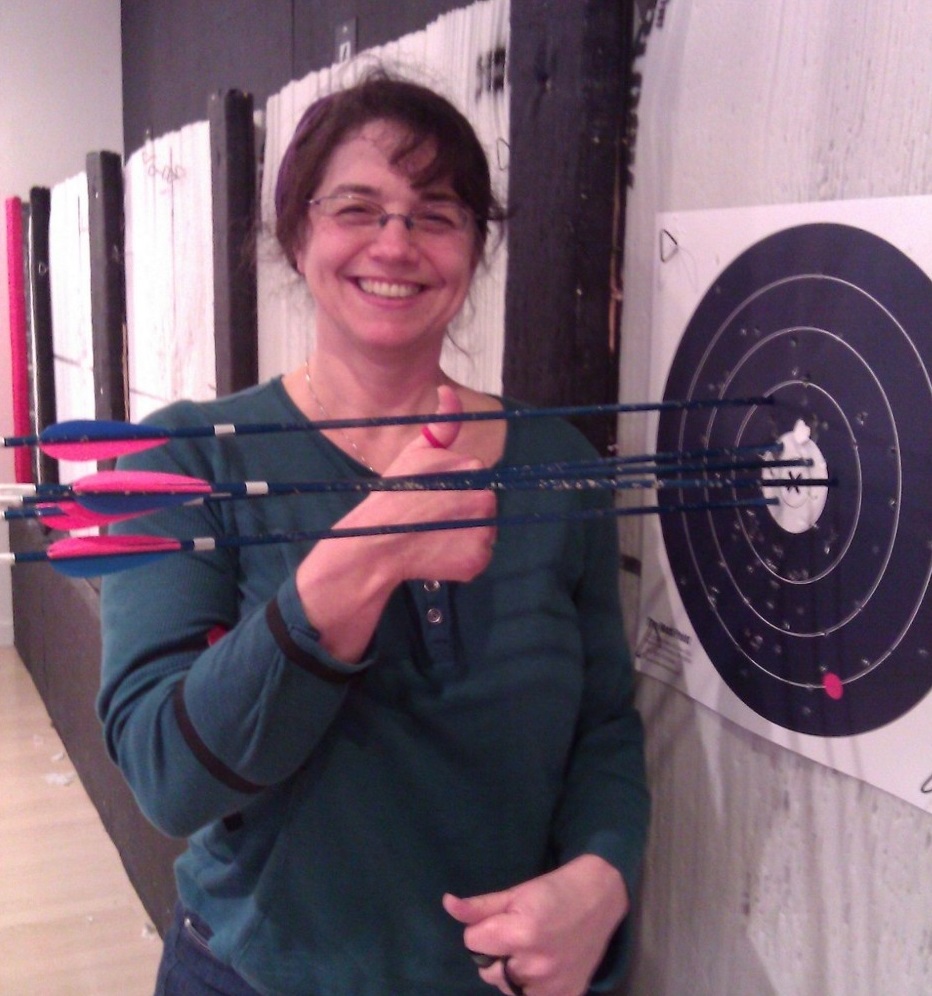
I’ve been taking archery classes for about four months now.
It looked like fun and I wanted to try it. Also, I plan to write a main character who uses a bow for survival, so I wanted to have first-hand experience. If that sounds like an excuse well… Okay it is an excuse. I found out that it not only looks like fun, it is fun!
Miriah’s best target shooting at 10 yards (so far)
But now whenever I see characters on TV and in films with a bow, I notice the inaccuracies. Partly because I want to make sure my writing is as realistic as possible.
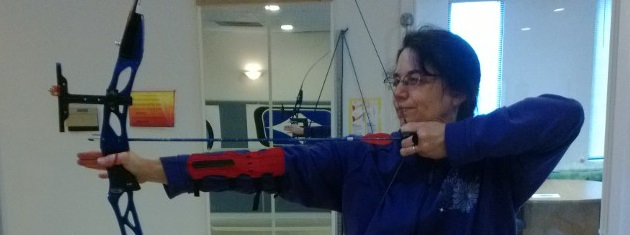
First of all, a real archer would never hold the bow when she draws, aims and releases the arrow. When you see that archer in a film drawing the bowstring and gripping the bow with their bow hand? There is no way that is real. After safety, this was the first lesson. Gripping the bow with your bow hand when you shoot throws off your aim in an unpredictable way. So a real archer wears a finger sling – a loop of cord that goes around the bow and is attached to the thumb and a finger of the bow hand so the bow does not fall to the ground after he releases the arrow.
Anchor under jaw line Notice my bow hand is not holding the bow
Another thing I notice on TV and film is the fictional archer’s anchor. When the archer draws the bowstring, are all three fingers under the nock, with hand resting (anchored) against his cheek? Is the nock between the first and second fingers with the hand under the jaw? Is the palm turned inward or outward? I have tried all of these techniques in class. In the current modern sport, which one depends on the type of bow, usual range, individual preference, and probably lots of other things I haven’t learned yet.
Anchor at corner of smile Notice my bow hand is not holding the bow
In the fantasy or historic setting of a story, the anchor method would be a significant identifier of where (region or culture) the archer was from. For accuracy, the important thing is consistency and releasing the bowstring without conscious movement – your fingers simply relax. All movement in the bow arm when the arrow is released comes from tension in the back muscles that are working to draw the bowstring.
I’ve learned that you never (intentionally) “dry fire” a bow. That’s what it’s called when you draw the bowstring without an arrow nocked, and release. The energy that would otherwise go into the arrow and send it flying feeds back into the bow instead – it can break the bow. One way that could happen accidentally is if the arrow’s nock breaks. So a good archer always takes care of her arrows and inspects them regularly.
Another thing I will be taking into consideration when I write an archer is that shooting arrows is very tiring. A long bow (the most likely version in a low-tech setting) requires a great deal of strength just to draw. A composite Recurve bow (like the one Katniss uses in The Hunger Games film) is not as difficult to draw (it’s the type I usually use in class), but still wears you out. A compound bow is more high-tech (that would be my choice for a steam-punk setting) and makes it possible to “hold” the bow in the drawn position without much effort.
The character I write who is relying on her bow skills to survive will also need to practice every day. Luckily she won’t mind. Because shooting a bow is fun.










 viewpoints