writing just for fun: PBEM RPG

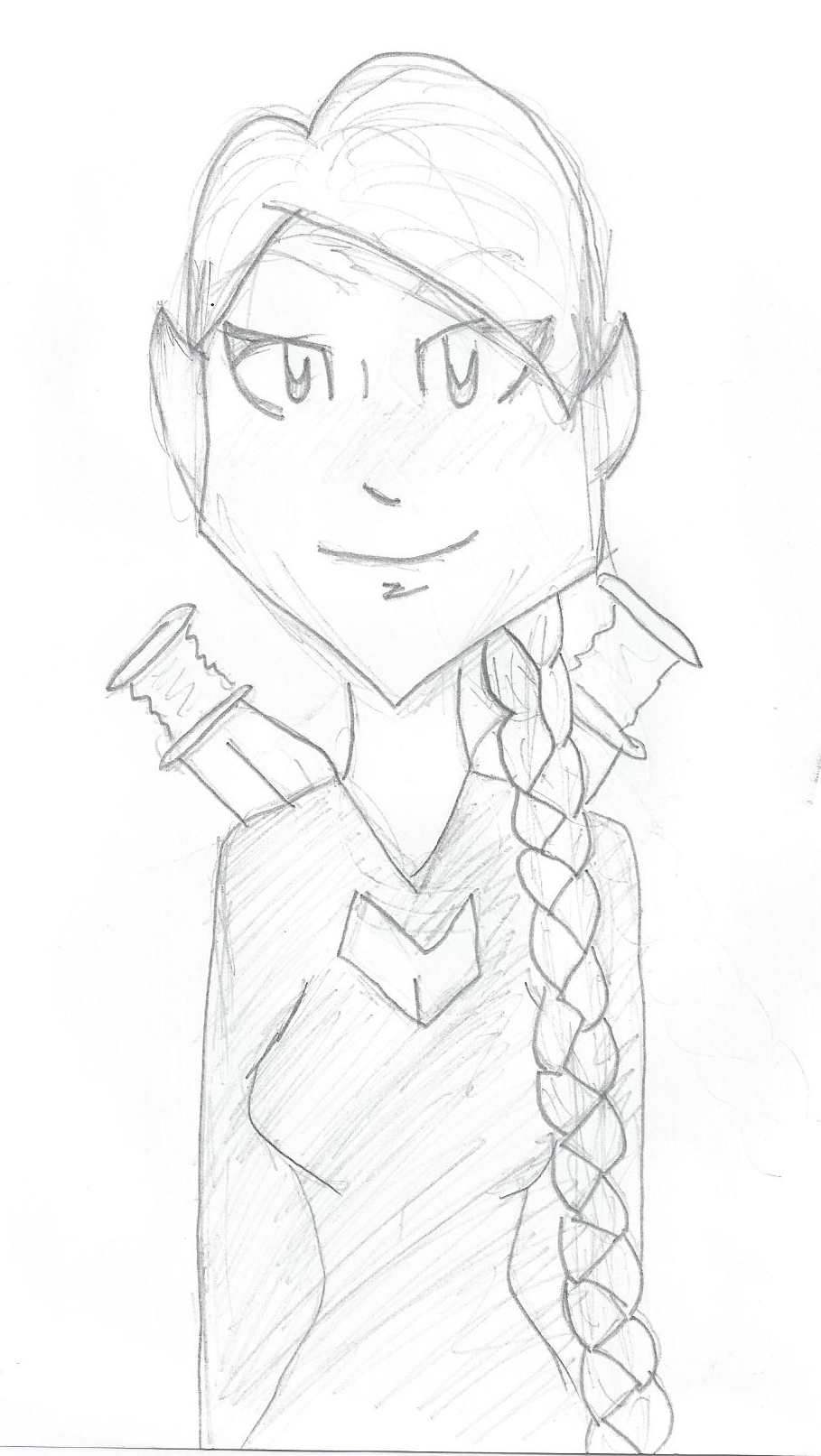
Elf drawing by Miriah's daughter
One of my DA:L characters, as imagined and drawn by my daughter Aly

This blog is supposed to be about my learning experiences on the “path” to becoming an author. But it’s time for me to diverge and talk about another writing activity I indulge in. It’s a play-by-email role-playing-game (PBEM RPG).

The usual response, when I explain this activity to people I know or meet, is a blank look. Most people have heard of role playing games like Dungeons and Dragons and yes, it’s a bit like that. The “game” is played by writing pieces of the story, and posting it via email to the other players. So unlike D & D, we don’t play it in real time, it’s more like writing a story cooperatively. I write all of the actions and dialogue for my own character(s), and the other players do the same for their characters. Chances are, if you aren’t a writer, or rpg-gamer, your eyes have glazed over by this part of my explanation.

We write in a shared world. The story is set in the world of Dragon Age, a video game, so technically this cooperative story is fanfiction. The name of the RPG is Dragon Age: Legacy (DA:L). From my point of view, PBEM RPG exists in a void between original writing and fanfiction, between a face-to-face RPG and a written story, between programmed characters in a video game and real people.

I thought I would delve a little more into what it is about this writing activity I like so much. I figure that my family, at least, might like to know.

First, I love the writing. To me it’s the best, most fun part of writing. Writing just for fun, writing to set the story down, writing to move the story along, writing to share the experience with a relatively small audience of other writers who are also invested in the story. Each post doesn’t need to have perfect grammar, it doesn’t have to be publish-worthy, it’s just fun.

Before I go on, let me just clarify something. Overall, the writing in our shared DA:L story may not be polished enough to be published as-is, but I think we have some damn good story telling going on.

The characters (all original) form friendships, experience adventures, and indulge in romance, conflict, etc. Writing a PBEM RPG is different than writing a story, because although I can influence the plot, I have no control over what the other characters do. That might drive some writers crazy, but I enjoy that part. As I have gotten to know the other writers, and as they have developed their characters, I am better at predicting what they might do, but I never know for sure.

Quite a few writers look disparagingly upon fanfiction. I totally understand why some people feel that way. I personally think fanfiction is a wonderful way to get started writing. It’s what got me started. But I will stop there in my defense of fanfiction because plenty of other people have covered that already.

For our RPG, using a world that is already extremely well-defined (it has a wiki and everything) just makes everything so much easier, like a D & D dungeon already mapped out. Each of the writers has played  throughthe Dragon Age video game(s). The world is already built; the playground is just there for the characters to explore and enjoy, ready for the writers to create adventures there, with little effort needed from the Game Master (GM) to maintain it. Many of our players (including myself) were recruited from the Dragon Age fanfiction community.

One of the ways DA:L differs significantly from a fanfiction story, is that ALL of our player characters are original. Sure, the “cannon” characters exist in the world, but on the rare occasions when one of our player characters needs to interact with a cannon character, the GM makes sure he or she behaves in a way consistent with “cannon”. So we don’t make major changes to this world that doesn’t belong to us, we are only borrowing it after all.

One of the most important habits of writing is, as I said in my first blog post, to just keep writing. DA:L keeps me writing.

In the interest of full disclosure, there IS a down side to all this writing fun. Sometimes another player will respond the same day to a post their character is tagged in. But more often it takes several days, and occasionally as long as a month. That used to bug me. But I’m over that. Honestly, when another player goes quiet for a couple of weeks, what goes through my mind isn’t annoyance they haven’t posted, but worry that they’ve decided to quit the game. Because I personally hope to keep writing it for a very long time!

Happy Writing ^_^


Dragon Age: Legacy (my own description)

The story existed in a world created and owned by a software gaming company. Although certain locations in the world were well defined visually – as the backdrop for the popular video game – most of the world was a blank canvas. The road their characters traveled was black and white, a two-dimensional line between points on a map. The group of writers used the magic of words conveyed by email posts to give it form and substance, color and emotion, aroma and taste. The world came equipped with a history and lore, predetermined races, iron-age technology, and rules for using magic. The writers came equipped with imagination, dedication, and a passion for storytelling. The writers adopted that world and nurtured it, until it blossomed and grew into something new and unique. They brought their world to life.

Alien and Bagpipes

Drawing of bagpipes held in tentacled arms
Tentacles and Bagpipes (sounds like the name of a pub)

In every writing class I’ve taken so far, right after the subject of editing is covered, someone always asks:  how much editing is too much? How do you know when you’re finished editing and the piece is ready to submit? Usually a fascinating discussion ensues, because everyone has their own opinion. But I never felt like I left with a satisfying answer. Under-editing is usually my problem. I know there are perfectionists out there. I am not one of them.

I suspect the real answer is something like this: when you know what you’re doing, you’ll know when the story is ready to submit.

I still don’t know what I’m doing, but I submitted a  short story to a speculative fiction market today anyway.

Since I’m still trying to learn, I brought this story to the point where I think it’s ready through a long process of trial and error. The title has changed a couple times, but if you are one of the people I begged to critique it, you will recognize it as the “Alien and Bagpipes” story. The current title is “Earth Music” (about 1100 words).

It started as a writing prompt from one of Cat Rambo’s classes, something like: “Describe an earth object from the point of view of an alien.” So obviously I chose to describe Highland bagpipes from the point of view of an octopus-like alien that lives underwater.

But, a description isn’t a story. So I added background to explain why the alien had the bagpipes, and what he was planning to do with them. I thought the story was finished, and I submitted it too soon. Re-reading that “story” now, it is clear to me that not only did it need more editing, but it wasn’t complete.

So after it was rejected the first time I added a conflict. I added an unhappy ending. I edited. I took out the extra adjectives and adverbs and did my best to make sure any remaining adverbs were pulling their own weight. I submitted to another market. By the time it was rejected, I had joined a critique group, who were kind enough to work-shop it. I got great feedback, and one writer suggested that I take the circumstances that led to the unhappy ending and “really go for it”.

The story sat on the back burner for a couple months before I came back to it. I re-wrote it so that the entire story builds up to the ending. I asked for critiques and was lucky enough to get some extremely helpful input from a total of six people.

This afternoon I convinced myself it was ready to submit. Again. If I had tentacles I’d be crossing them now.

# # #

P.S. I sincerely hope that no one who reads my “Earth Music” story is offended by what happens to the bagpipes in the end. Cha d’rinn cròn air pìob sam bith ri sgrìobhadh na sgeulachd seo. (No bagpipes were harmed in the writing of this story.)

One added comment:  Except for the photo of me on the “About” page, so far all of the photos on this blog were taken by me. For this particular post I tried to find an image of tentacles and bagpipes on the internet. I was shocked to discover there weren’t any. I had to resort to making my own. What’s up with that? Really, interwebs, you let me down this time!

Gàidhlig side effect

photo taken on the Isle of Skye 18 July 2011
View on the Isle of Skye, taken on our July 2011 holiday

As mentioned on my “About” page, I’m a Gàidhlig learner. Sadly, I’m not very good at it, so far. The partner of one of my teachers suggested that I try writing in Gàidhlig. If only! I can barely write the simplest of sentences, so far.

The Seattle Fèis is coming up very quickly. Four whole days of Scottish language and culture with tradition bearers in the areas of language, song, pipes, harp, and fiddle, including native Gàidhlig speakers from Scotland and Cape Breton! I am SO looking forward to it.

What does learning Gàidhlig have to do with improving my writing (in English)?

An interesting side effect of learning (or in my case attempting to learn) Gàidhlig, is that it has made me look at the English language a little differently. Not only do I think about grammar in a more analytical way (verb, noun, adverb, adjective, preposition, dependent and independent clauses, dative case, and genitive case) but I am more aware of the way language influences the way I perceive the world.

In English the “basic” sentence structure is Subject – Verb – Object. To form a question, the order is changed to Verb – Subject – Object.

Gaelic languages (Irish, Welsh, Gàidhlig) are verb-centric. In most sentences the verb comes first, Verb – Subject – Object. Every verb has different forms that indicate tense, and whether it is positive or negative, statement or question. (Sentences using question words – who, what, how, how many, why, where – are handled a little differently). There is no word for “yes” or “no”, you answer a question with a negative or positive form of the verb used in the question.

For example, for this question:

A bheil thu sgìth? (Are you tired?)

The positive answer can be: “Tha” (yes) or “Tha mi sgìth” (I am tired).

The negative answer can be: “Chan eil” (no) or “Chan eil mi sgìth” (I am not tired).

Another example:

An do sgrìobh thu an-diugh? (Did you write today?)

Positive answer: “Sgrìobh” (yes) or “Sgriobh mi an-diugh” (I wrote today).

Negative answer: “Cha do sgrìobh” (didn’t write) or “Cha do sgrìobh mi an-diugh” (I didn’t write today).


As a writer, I wonder if thinking in English influences me to care more about who or what is doing something, rather than what they’re doing. Is that why I have to make a conscious effort to avoid lazy adverbs and come up with good verbs in my attempts at writing?

If I ever get to the point in my learning where I can think in Gaelic, maybe I’ll see the world a little differently. At the Seattle Fèis, I’m looking forward to asking the native Gàidhlig speakers how they think.

Edit. Procrastinate. Edit. part 2

A photo of Kiki the cat - the passive verb "was" personified
Kiki demonstrates the lazy nature of the verb “was”

What words of wisdom do I have regarding self-editing? To start with, I recommend a book by Ken Rand, The 10% Solution. The sticker price is $10, and it’s a slim book and a quick read. Like all how-to-write books, I expect more of it will be meaningful to me as my writing improves, but for now it has two main ideas I frequently use now.

1) Read the story aloud. This advice is just so important. Many errors, awkward sentences, overused words, and bad grammar just jump right out at you when you read the story aloud.

2) Use the search function on your word processor to identify problem markers. In his book Ken Rand identifies twenty-six words and suffixes to scrutinize. This is a very useful tool for zeroing in on problem areas of a story that may need rewriting.

I could just end there with the advice to go read that book. (I really do recommend it.) But first I’d like to explain my own take on why “ly”, “ing”, “was”, and “of” (as examples) are problem indicators. I don’t love to study grammar, but lately I’ve found that knowing a little bit about grammar helps me understand why certain word constructions are more successful than others.

Most adverbs end in “ly”. The purpose of adverbs is to modify the verb. Now, verbs are what bring life to a story. Good verbs engage the reader and drive the action. But adverbs are word vampires. They suck the life energy right out of a verb, and slow it down so that it’s left struggling to move. Some writers avoid adverbs completely. For myself, I’m willing to put up with a few. But generally speaking, every time “search” finds an adverb, I try to find a better verb and toss the adverb. When I do use an adverb, I make sure it’s pulling its weight by adding an important piece of information to the verb. For example, in the phrase “ran quickly”, “quickly” is not adding any information. A better verb might be “dashed” or “sprinted”, or just plain “ran”.

The “ing” suffix is added to a verb to make it function like a noun. (In grammar, I think it’s called a “gerund” or “verbal noun”.) Examples are: build to building, dance to dancing, feel to feeling.  Usually an “ing” word is giving a name to an activity, behavior, or “state of being”. Sometimes “ing” is added to a verb to turn it into an adjective (“tantalizing scent”, for example). Words that end in “ing” are the cross-dressers of the English language. It’s easy to be fooled. Once a verb dresses up in “ing” drag, he is for all intents and purposes a noun. Don’t let him sneak into the verb position!

“Was” (and her plural form “were”) are the past tense of the “to be” verb. “Was” is passive. She is the couch potato slowing down your prose to take a nap, and putting your reader to sleep along with her. She likes to collude with her best friend Gerund, and make your story boring with passive phrases like “he was running” instead of “he ran”. When I start editing, I usually search for “was” first, because she sneaks into my first drafts way too often. I replace “was” with an active verb whenever I can.

The word “of” can be used to construct the genitive, or possessive case instead of “ ‘s”. For example “the tail of the dog” or “the dog’s tail”, “the love of a mother”or “a mother’s love”, are genitive constructs that mark one noun modifying another. Sometimes “of” is used with intent, for example “the quality of mercy” sounds so much better than “the mercy’s quality”. Or there may be an established convention, for example we (usually) wouldn’t write “The America’s United States”.  But “of” is another word to watch out for. “Of” has passive aggressive tendencies and likes to slow down the action. He makes the reader stop and pay attention to exactly which noun is possessed by another. Stories often move along faster using “of’s” agreeable little sister “ ‘s”.

Now that I’ve finished this blog post, it’s time to go edit a story. But first I’ll just make myself a cup of coffee…

Edit. Procrastinate. Edit. part 1

photo of my cat, Snowflake - the ultimate procrastination role model
Snowflake has procrastination down to a fine art.

If there’s one thing that  drives me to procrastinate, it’s editing. It can even drive me to write another blog entry. Oh yes, I really should be editing that last piece, but first I’ll need a cup of coffee, then I’ll just start a load of washing, and I’d better check my email… You get the idea.

When I first started writing, I thought editing was about correcting spelling and grammar errors.  But no, that’s only the tip of the iceberg. A very small tip, one that will fit in my cup of iced coffee.

Writing the story is the fun part. Some writers, including me, talk about turning off our “internal editor”. For me, (I won’t try to speak for other writers) that’s the part of my brain that wants to make every sentence perfect the first time I write it. One skill I got out of completing NaNoWriMo was learning to turn down the inner editor’s voice. She’s allowed to add notes (“need better verb”, “more description”) but otherwise I know that if I let her interfere, I’ll get bogged down in one sentence and I won’t finish the story.

I love that feeling I get after finishing a first draft. I just want to submit it right away. But now I know better. I send it to my first reader, who happens to be my mother. I recommend recruiting a first reader, someone to read that first draft. Preferably this would be someone who loves you unconditionally (just in case the story is complete cr*p), who will agree with how absolutely wonderful you think it is. Once your ego is soothed, put that story aside for at least a few days.

Why not start editing that first draft right away? Because at this point I’m in love with that story. It’s my baby. I don’t have the perspective I need to see its flaws from the point of view of an editor, or even a savvy reader. I have a couple stories that I think – from my admittedly biased point of view – would have been good candidates for particular markets. But I blew it because I submitted them before they were ready.

(To be continued)

Just Keep Writing

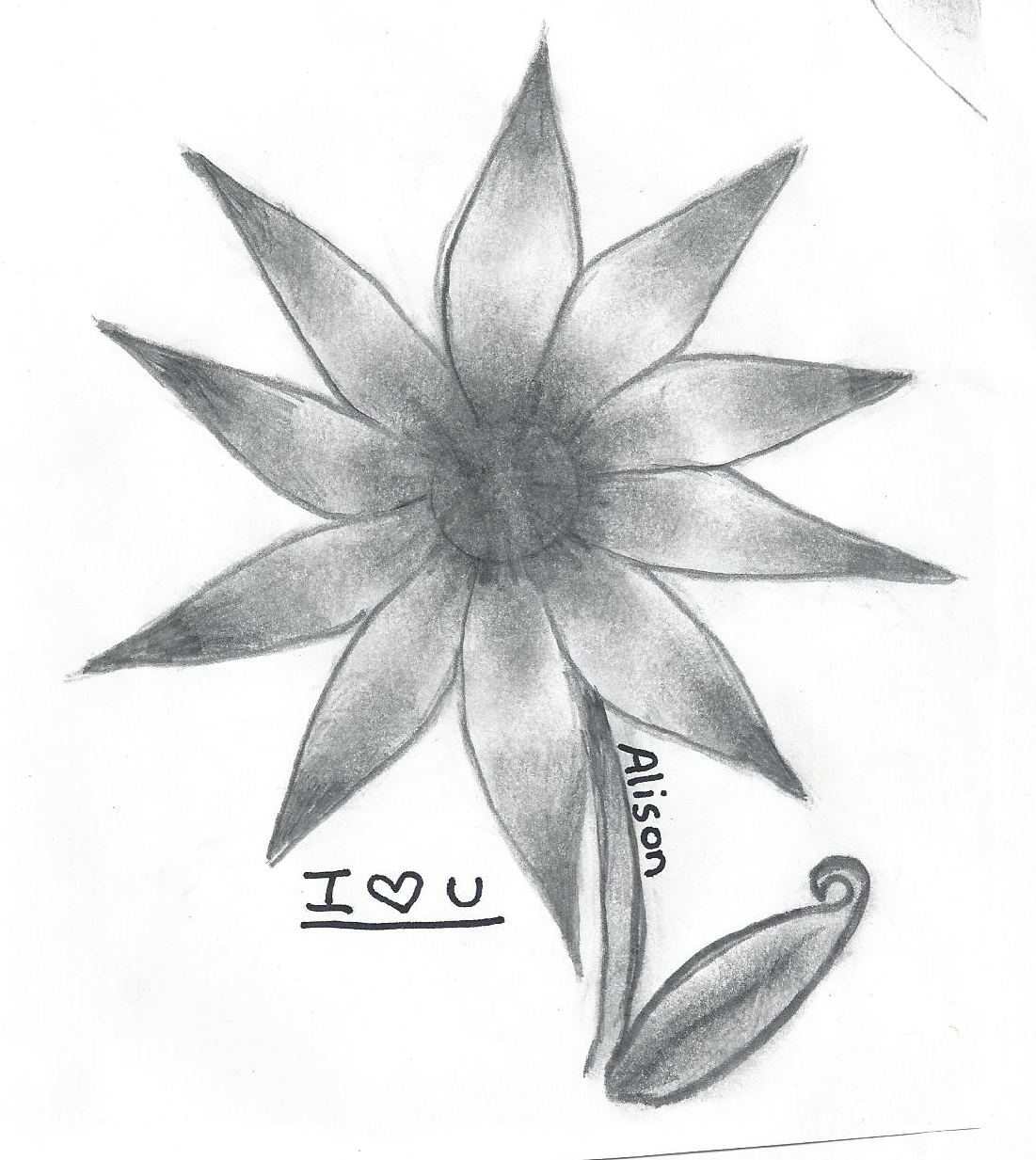
flower drawn by Miriah's daughter
flower drawn by Miriah’s daughter

My intention is to write a series of posts about what it’s like to be a beginning writer, aspiring to “author-hood” and trying to get that first story published. Eventually I hope it becomes a series of posts about getting that second and third story published, but now I’m getting ahead of myself.

One thing I’ve found is that it is far too easy to get distracted or intimidated by the white screen of a new Word document, or a blank page… or a new blog sitting there for over a week without an initial entry. Waiting for inspiration or for an end to “writers block” is just another form of procrastination (in my opinion). I feel it’s important to just keep writing.

I try to write something every day. It may be pure cr*p, or it may be brilliant (at least from my point of view), but I keep writing. Because when I take time to write I am informing my brain that this is important to me. This is the part where we are having fun.

I’ve been reading a book, “Creating Short Fiction” by Damon Knight. It was recommended to me by a new friend: Christy, pen name Folly Blaine. It’s a quick read, but also I find myself going back to re-read a passage and just sit and think about it. In particular, the section on engaging and collaborating with one’s creative unconscious self was meaningful to me. Mr. Knight even named the creative part of his brain (I haven’t tried this yet). So I’m making a greater effort to nurture my creative self.

For instance, if I have an idea rumbling around in my head, I write it down. That tells my creative brain the idea is important, and clears my analytical brain to move on and think about something else. I also pay attention to when my right brain is active and ready to work. Personally, I’ve found that mid-morning and late at night are the times when my unconscious mind is the most productive. If at all possible I write in the mornings, and sometimes I get up in the middle of the night to write.  (Now I know why I often have trouble sleeping.)

I celebrate the tiny accomplishments. I finished a story, yay! I submitted a story, yay! My Dream Catcher story was “passed on to the next round of consideration” (this news came a week ago) Yipee!!!

And now I’ve posted my first blog entry. Yes!

Just keep writing!

Miriah